
Temple complexes are holy grounds devoted to the worship of Sangje and the Great Divine Beings of Heaven and Earth. Alongside Sangje, the 15 Hierarchical Divine Positions are prominently enshrined, representing the law of the Dao as defined by Sangje and revealed and established by Doju, who fully awakened to Sangje’s Reordering Works of Heaven and Earth.
Dojeon emphasized that there is an institutional system within our religious order to uphold and protect the law of the Dao, and that the aims of our cultivation can only be achieved by faithfully observing these law and system while maintaining them intact. Temple complexes are replete with divine beings; thus one should keep their mind and body pure and upright at all times.
Throughout the country, there are five temple complexes, starting with Yeoju Headquarters Temple Complex, and also including Junggok Temple Complex, Jeju Training Temple, Pocheon Cultivation Temple Complex, and Geumgangsan Toseong Training Temple Complex.
This temple complex is located in Yeoju-si, Gyeonggi-do.
Surrounded by low mountains,
it has a warm and cozy ambience.
This temple complex is located on the foothills
of Sinseon Peak (1,204m), the first of 12,000 peaks
in the Geumgangsan Mountains.
This temple complex is located at the foothills
of Wangbangsan Mountain (773m) in Seondan-dong,
Pocheon-si, Gyeonggi-do.
Daejin University is located in proximity
to it.
This temple complex is located at the foothills
of Yongmasan Mountain, which is connected
to Bukhansan Mountain and Suraksan Mountain,
and faces the Hangang River.
This temple is located in Nohyeong-dong, Jeju,
where the vital force of Hallasan Mountain is centered.


01
Bonjeon02
Bonggangjeon03
Daesoon-seongjeon04
Sihakwon05
Sibeopwon06
Jeongsimwon07
Jeonggagwon08
Cheonggyetap09
Jonggogak10
Sungdo Gate11
Jayangdang12
Jongmuwon13
Jonggak14
Ilgak Gate15
Pojeong Gate16
Explanotory Board17
New Life Building18
Illyeom Bridge19
Management B/D20
Assembly Hall21
New Assembly Hall22
Parking Lot A23
Parking Lot B24
Multi-purpose Field25
Naejeong


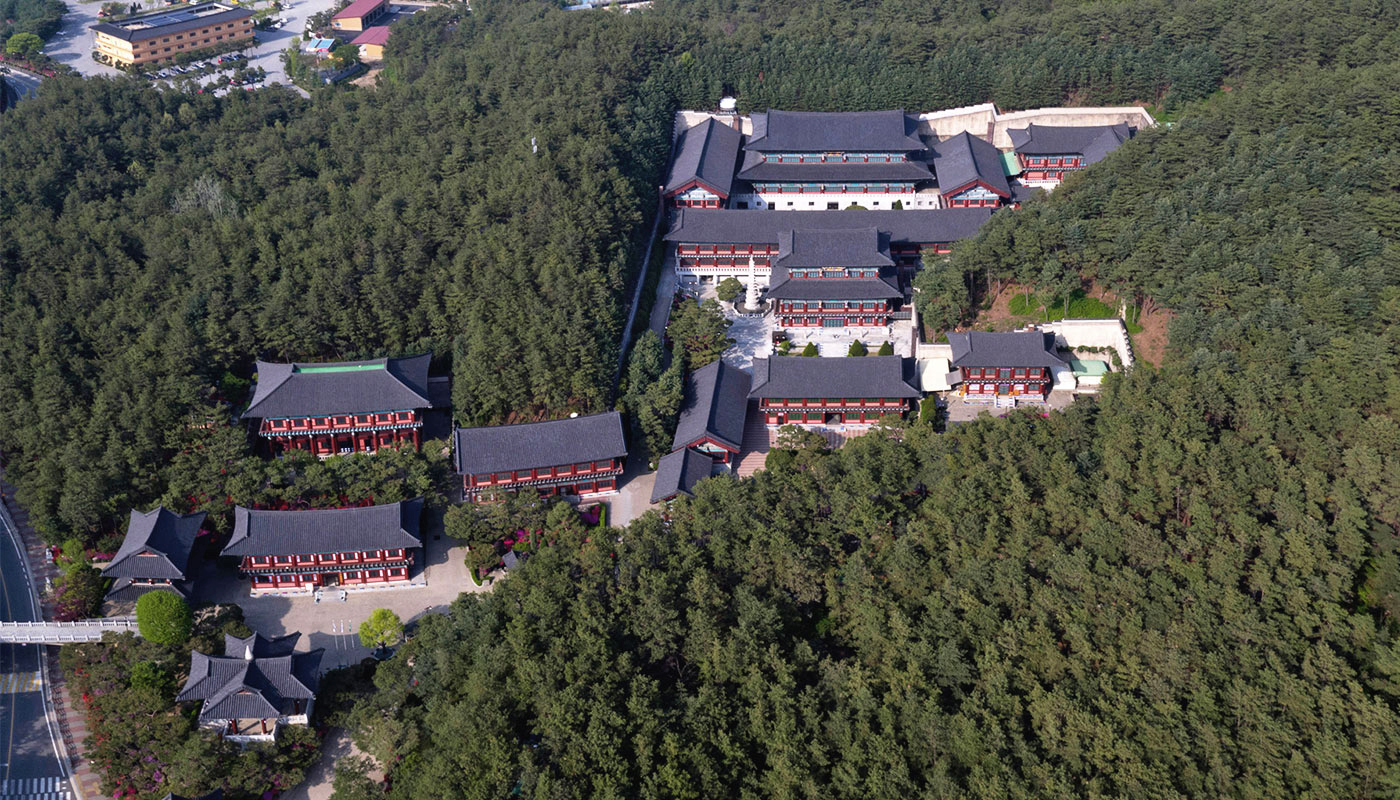
Yeoju Headquarters Temple Complex is located in Gaya-ri, Gangcheon-myeon, Yeoju-si, Gyeonggi-do. It is situated in a sacred and propitious site designated and hidden away for future use by Heaven. Positioned with the Namhangang River in front, this site also satisfies a vital Feng-Shui principle known as Baesanimsu, which means having a mountain at the back and water in the front. Yeoju Headquarters Temple Complex is the main temple and the largest in scale. The groundbreaking ceremony for the temple complex took place in May 1986, followed by the cornerstone laying ceremony of the main sanctuary building (Bonjeon) in July. Four months later, in November (25th Oct. in lunar calendar), the commemorative Offering Ceremony of the Enshrinement at Yeongdae Shrine (the Shrine of Gods) was held. Recitation Training (Suryeon) was introduced by Dojeon in 1986, followed by Specialized Recitation Training in 1991. After these training programs were implemented, the Holy Works of Shihak (which commenced on the summer solstice of 1991) and Shibeop were also initiated. These Holy Works have been conducted every day, all day long, without any breaks or rest, taking place at Shihakwon (the Building for Shihak), Shibeopwon (the Building for Shibeop), and Jeongshimwon (the Building for Forming an Upright Mind), with Yeongdae Shrine at the center. Sugang, a lecture-style educational course that enhances the capabilities and virtues of Dao cultivators, was initiated in 1986 and continues to this day.
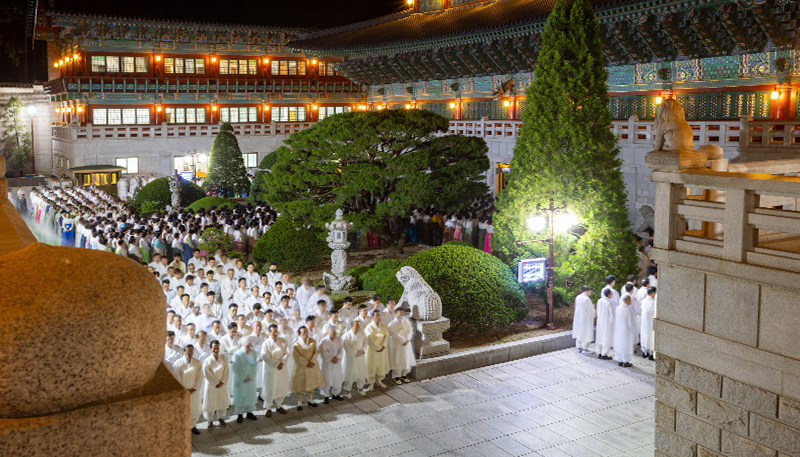 Most of the major ceremonies and occasions of the order, such as Chiseong and Bonbuseong, are held here. Additionally, serving as the central administration responsible for overseeing the local fellowship buildings, fellowship halls, and propagation centers nationwide, it faithfully carries out the order's administrative duties.
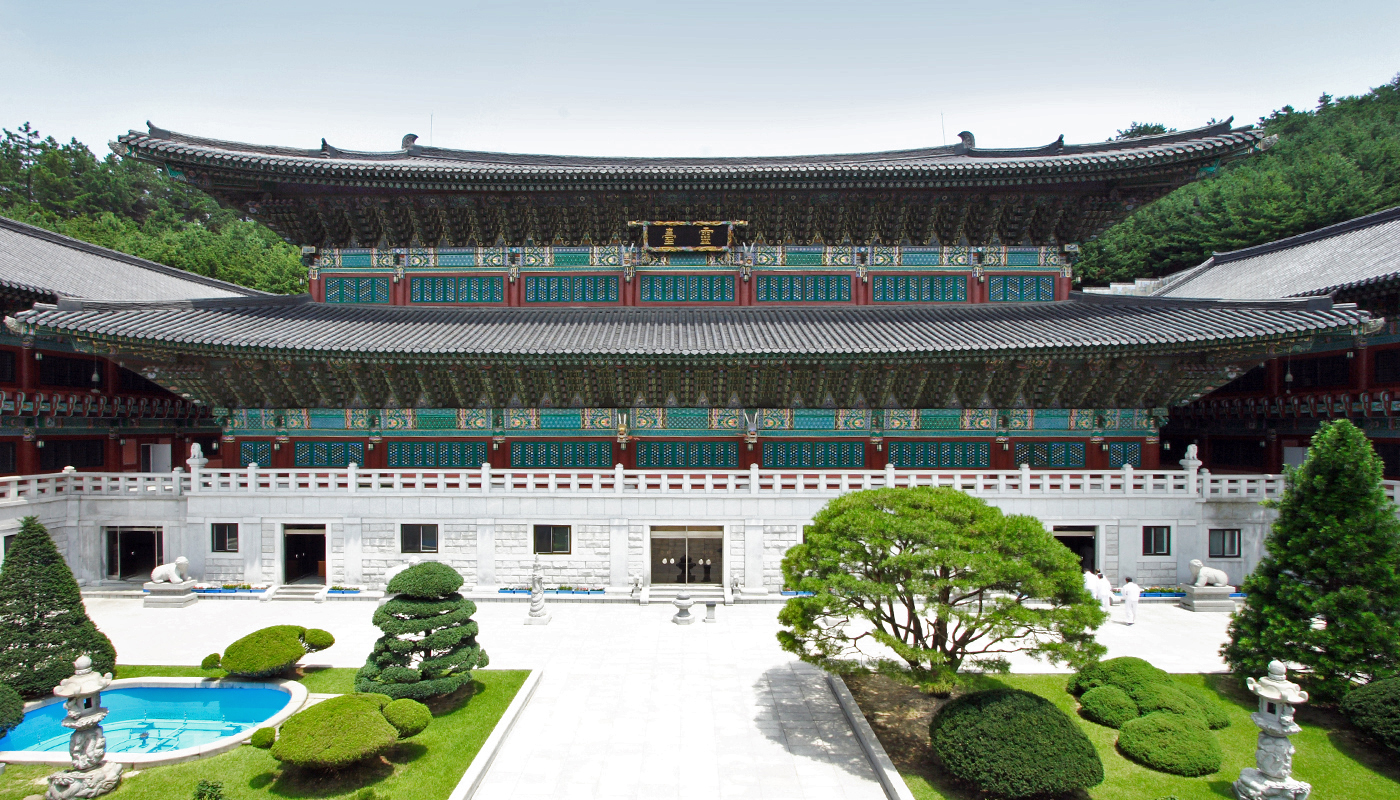
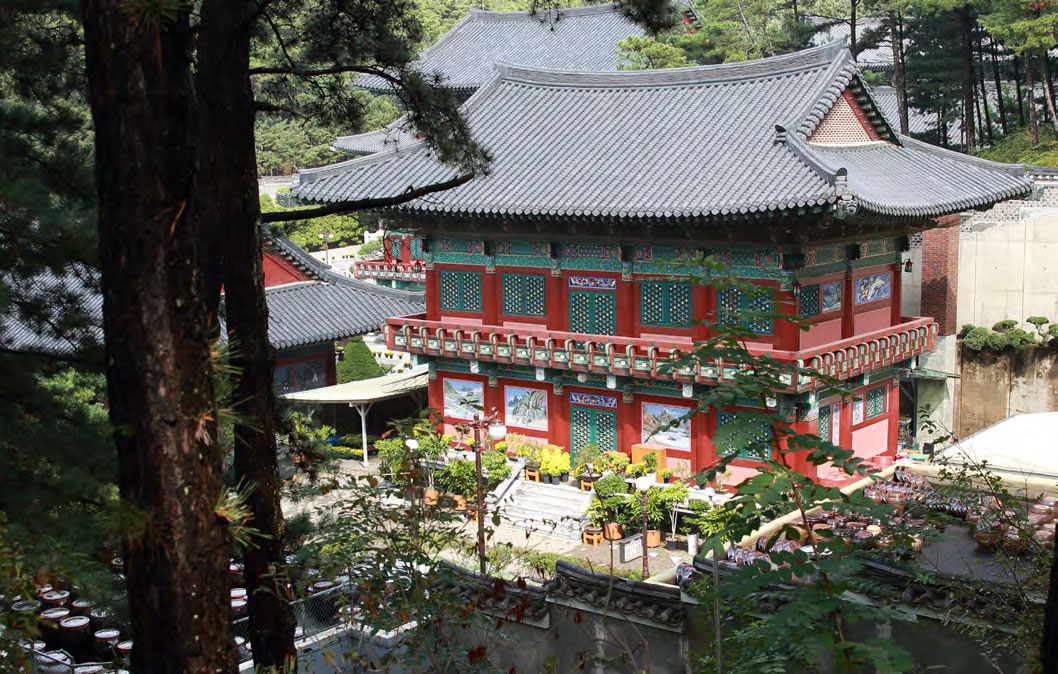
The buildings at the Yeoju Headquarters Temple Complex are arranged around the Main Sanctuary Building(Bonjeon), which houses the Yeongdae Shrine. This shrine enshrines the 15 Hierarchical Divine Positions, including Gucheon Sangje, Okhwang Sangje, and Sakyamuni Buddha. The Main Sanctuary buildings is the holiest place at Yeoju Headquarters Temple, where major ceremonies and rituals, such as Chiseongs and Gangsiks, are performed. Though it appears to have three stories from the outside, the building actually has a four-story interior, adding to its mysterious allure.
Centering around Bonjeon, Shihakwon and Shibeopwon are located on either side, with Jungsimwon opposite. At this place, 36 individuals form a group and perform the practice in turn, ensuring that the recitation of incantations continues uninterrupted for 24 hours a day.
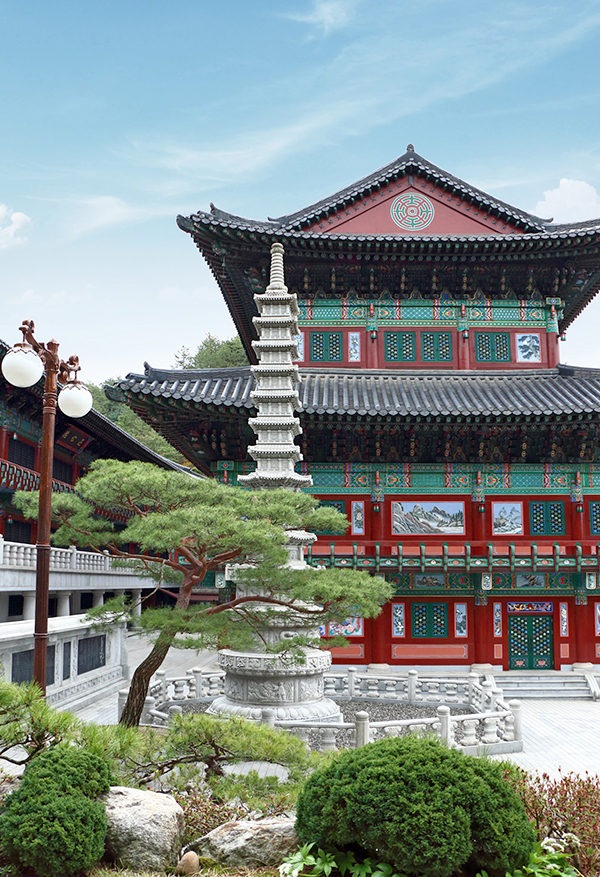 Bonggangjeon, meaning ‘embracing the energy descending from Heaven,’ enshrines the Principal Divine Positions of Sangje and Okhwang-Sangje, Sakyamuni Buddha, the 15 Great Deities, the 48 Divine Generals, the Divine Generals of the 28 Constellations, and the Divine Generals of the 24 Seasonal Subdivisions. Initially constructed to serve as Bonjeon, it was later renamed Bonggangjeon after the current Bonjeon was established in 1990. Behind Bonggangjeon, there are murals depicting the Ox Seeking Pictures (Simudo) and the Sun, Moon, and Five Peaks (Ilwoldo), as well as the Ten Longevity Symbols Paintings (Sipjangsaeng).
Cheonggyetap, located next to Bonggangjeon, is a 13-tiered stone pagoda standing at a height of 13.6 meters. The foundation stone of pagoda is carved with lotus flowers, symbolizing purity and harmony. Each layer is decorated with various engravings in relief. The first three layers are in the shape of a round pillar, with the Ox Seeking Pictures depicted on the first one, the Four Guadian Deities Picture (Sasindo) on the second one, and the Twelve Deities of the Chinese Zodiac on the third one. The next three layers are octagonal in shape, with 24 facets symbolizing the 24 Seasonal Subdivisions, and the subsequent seven layers, consisting of square pillars, have 28 facets representing the 28 constellations. Finally, crowning the tower, nine circles symbolize the ninth Heaven where Sangje superintends the whole universe. Thus, Cheonggyetap symbolizes the Devine the Dao of the universe encompassing heaven, earth, and humanity, embodying the ideology of Daesoon Jinrihoe. Ultimately, the Cheonggyetap is a sculptural structure that embodies the cosmic divine system and serves as a symbol of our Dao as the Dao of the gods (Shindo). The depiction of Simudo within this divine system represents the image of practitioners who are cultivating the Dao of the gods.
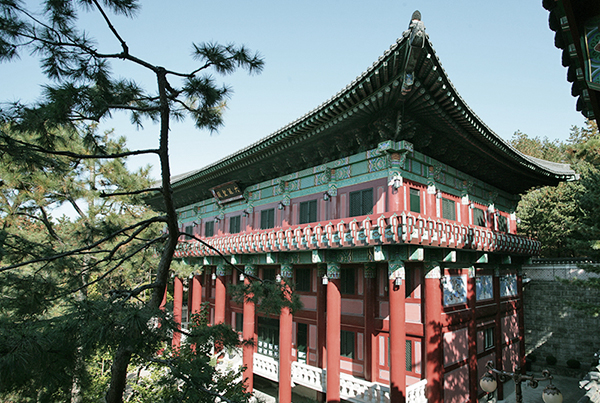 Daesoon-seongjeon (the Building of Sacred Paintings) is the place where sacred paintings depicting the biography of Sangje and Doju, as well as Dojeon’s sacred achievements, are enshrined. The Principal Divine Position, including Sangje, is also enshrined in the center of the hall.
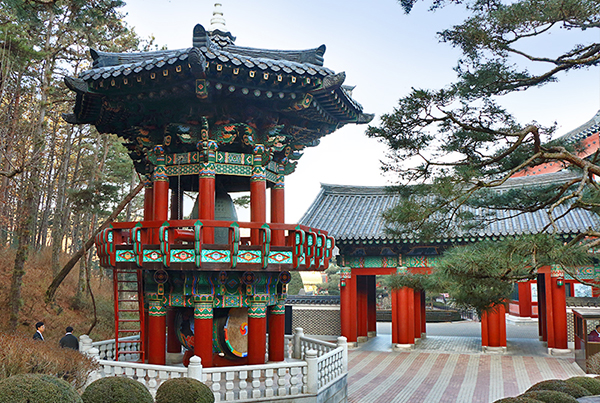 Jonggogak (the Bell & Drum Pavilion) houses Daewonjong (the Great Wish Bell) and Noehwago (the Drum of Thunderbolt Transformation). The sound of the bell resonates throughout the universe, awakening all things, while the drum is used to summon and disperse divine beings. Together, the bell and drum symbolize the virtuous harmony of yin and yang.


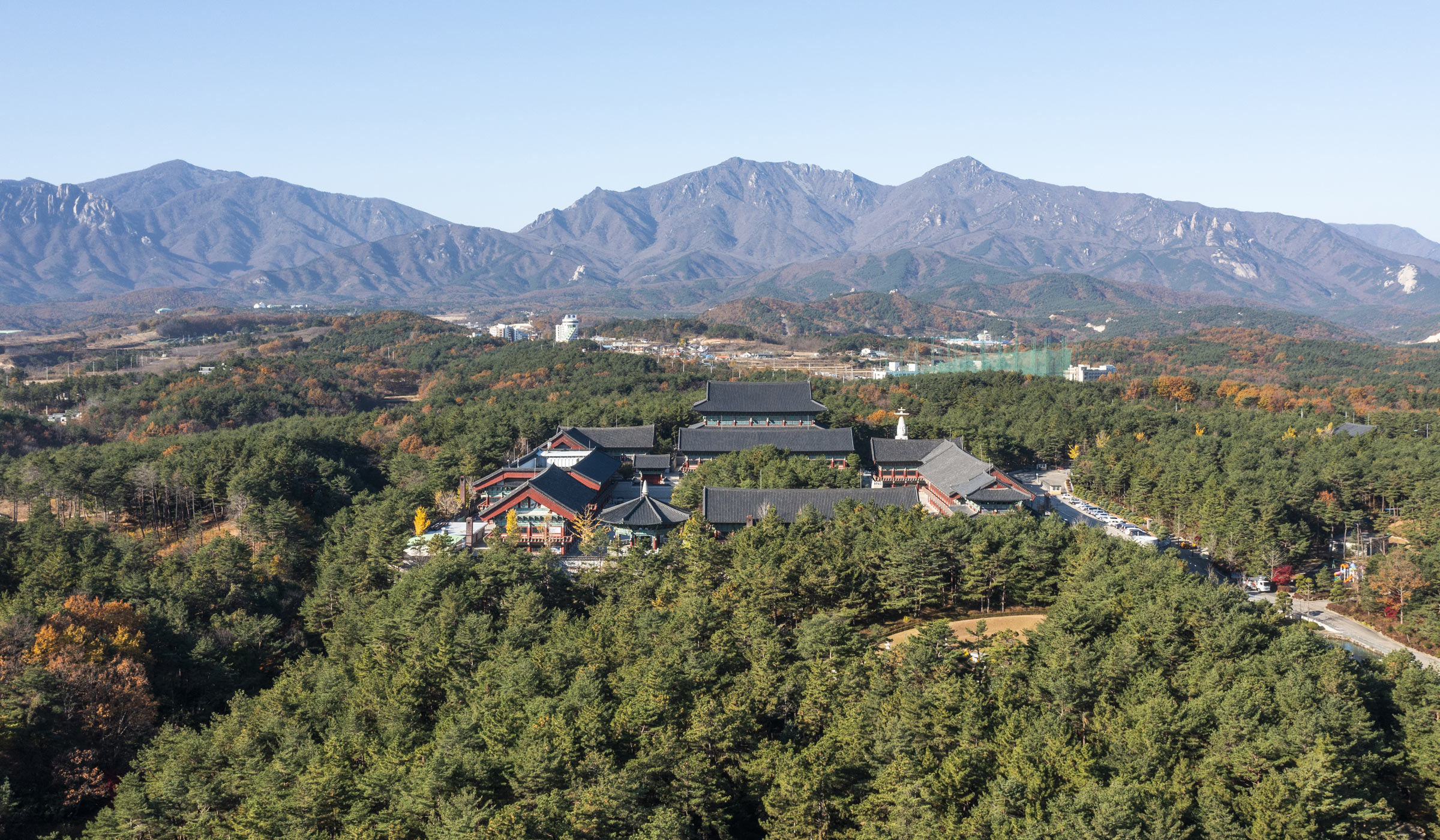
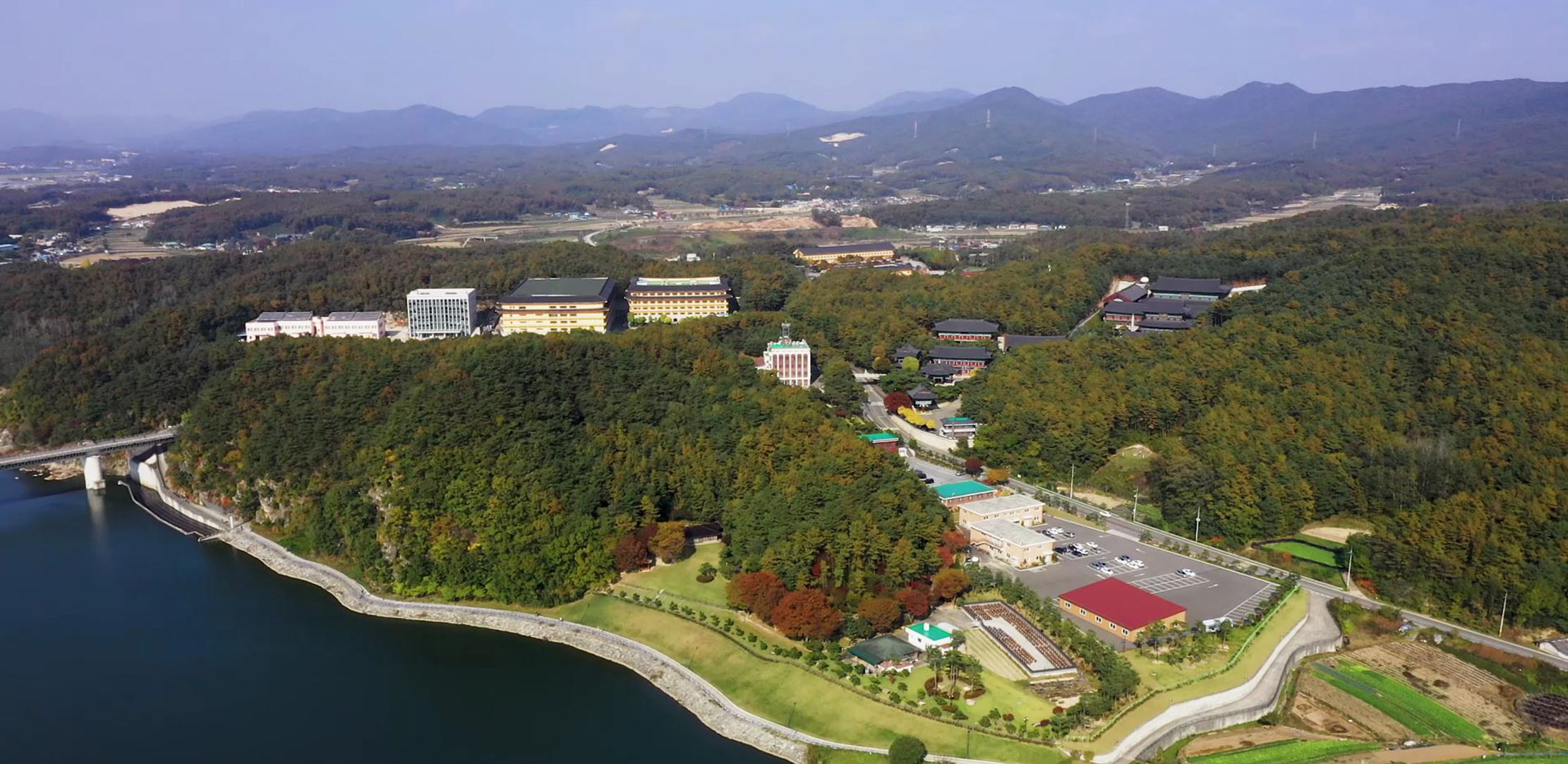
Geumgangsan Tosung Training Temple Complex is located in Inheung-ri, Toseong-myeon, Goseong-gun, Gangwon Province. It is situated at the foot of Sinseonbong Peak, the first of the twelve thousand peaks of Mount Geumgangsan, with expansive views stretching to the East Sea.
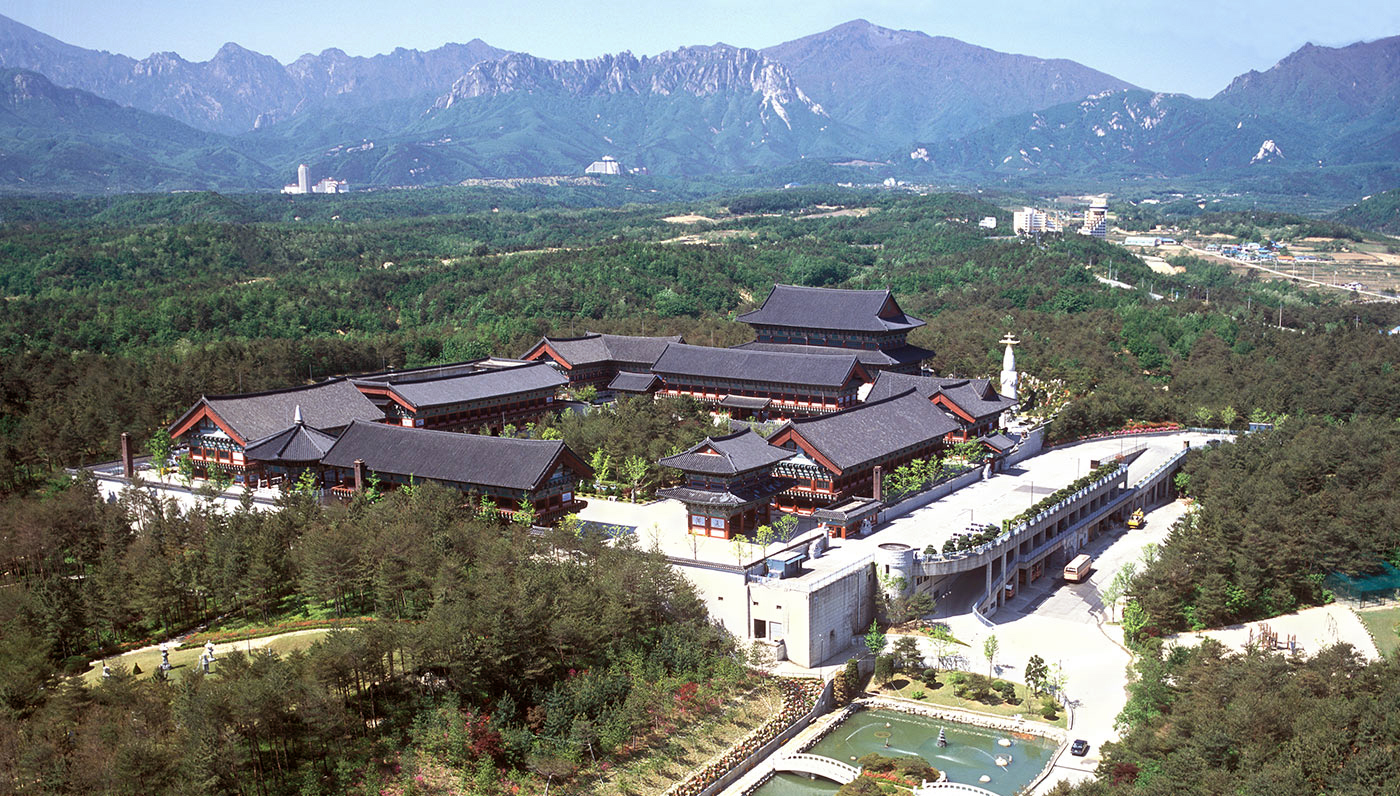
Geumgangsan Tosung Training Temple Complex is the most recently established temple of Daesoon Jinrihoe. It was marked by a groundbreaking ceremony in January 1995 and completed in February of the following year. Subsequently, the enshrinement offering ceremony for the Yeongdae Shrine took place. Built on a site spanning 35,000 pyeongs, the temple complex encompasses 13 buildings, including the Myeongsimdang Hall, the Pojeongmun Gate, the Soongdomoon Gate, and the Jonggak Pavilion, all centered around the Main Sanctuary Building. This main building houses the Yeongdae Shrine, which enshrines 15 Hierarchical Divine Positions, including Gucheon Sangje. Within the Jonggak Pavilion, there is a bell matching the size of the one at the Yeoju Headquarters Temple Complex. Additionally, a 2.5-meter-wide drum, known as the Noehwago, is housed within the Pojeongmun Gate.
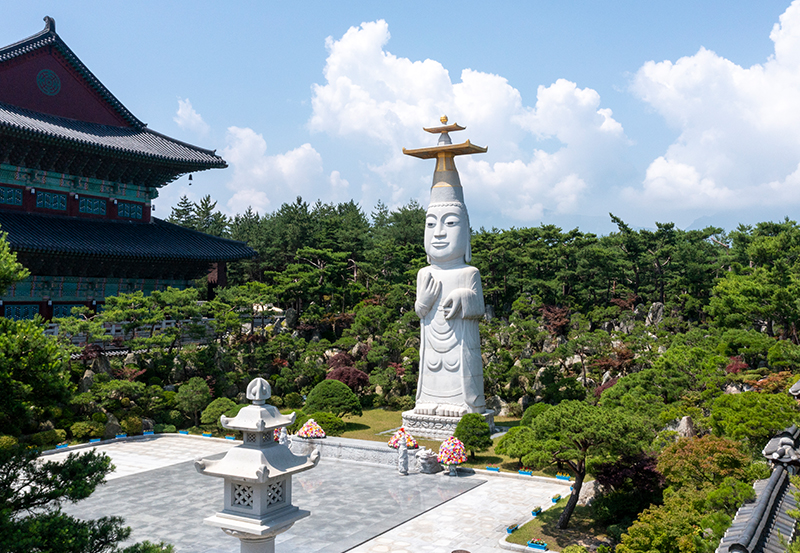 This site holds significance for Dao cultivators as it resonates with the words of Sangje: “The Dao will one day resonate with the twelve thousand peaks of Mount Geumgangsan and give birth to twelve thousand enlightened sages empowered by Dao.” Additionally, it features a statue of Maitreya Buddha and the tomb of Dojeon, making it a meaningful place for Dao cultivation. The burial site is located on a sunlit hillside along the path to the Rest Center, where many visitors come to pay their respects. The Maitreya Buddha statue was erected to symbolize Sangje, in accordance with his statement “I am the Maitreya...” and the prophecy of his return to this world. Completed in 1997, this stone statue stands 18 meters tall. Geumgangsan Tosung Training Temple Complex is open to all, offering access to the main building, the Maitreya Buddha statue, and the temple’s scenic landscape.
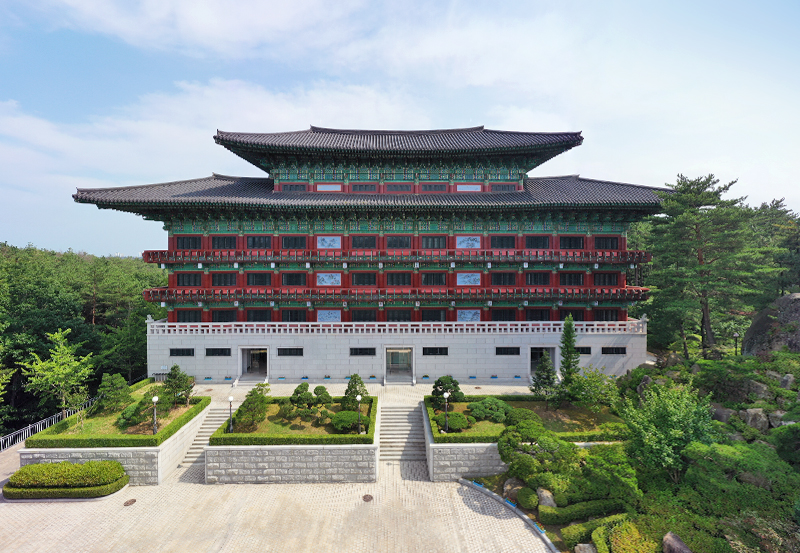 The Rest Center next to the temple complex was built in June 1996 and opened in April 1997. It has a 400-seat conference room, accommodations, and hot spring and sauna facilities that help visitors relax and unwind.
At the Geumgangsan Tosung Training Temple Complex, a training program for Dao practitioners has been held since January 31, 1996, which includes lectures and field trips. Each session lasts 5 nights and 6 days, with a group of 120 participants. In the mornings, there are lectures, and in the afternoons, participants visit cultural heritage sites and enjoy the beautiful natural scenery, allowing them to experience and understand the principles of the Dao in nature.
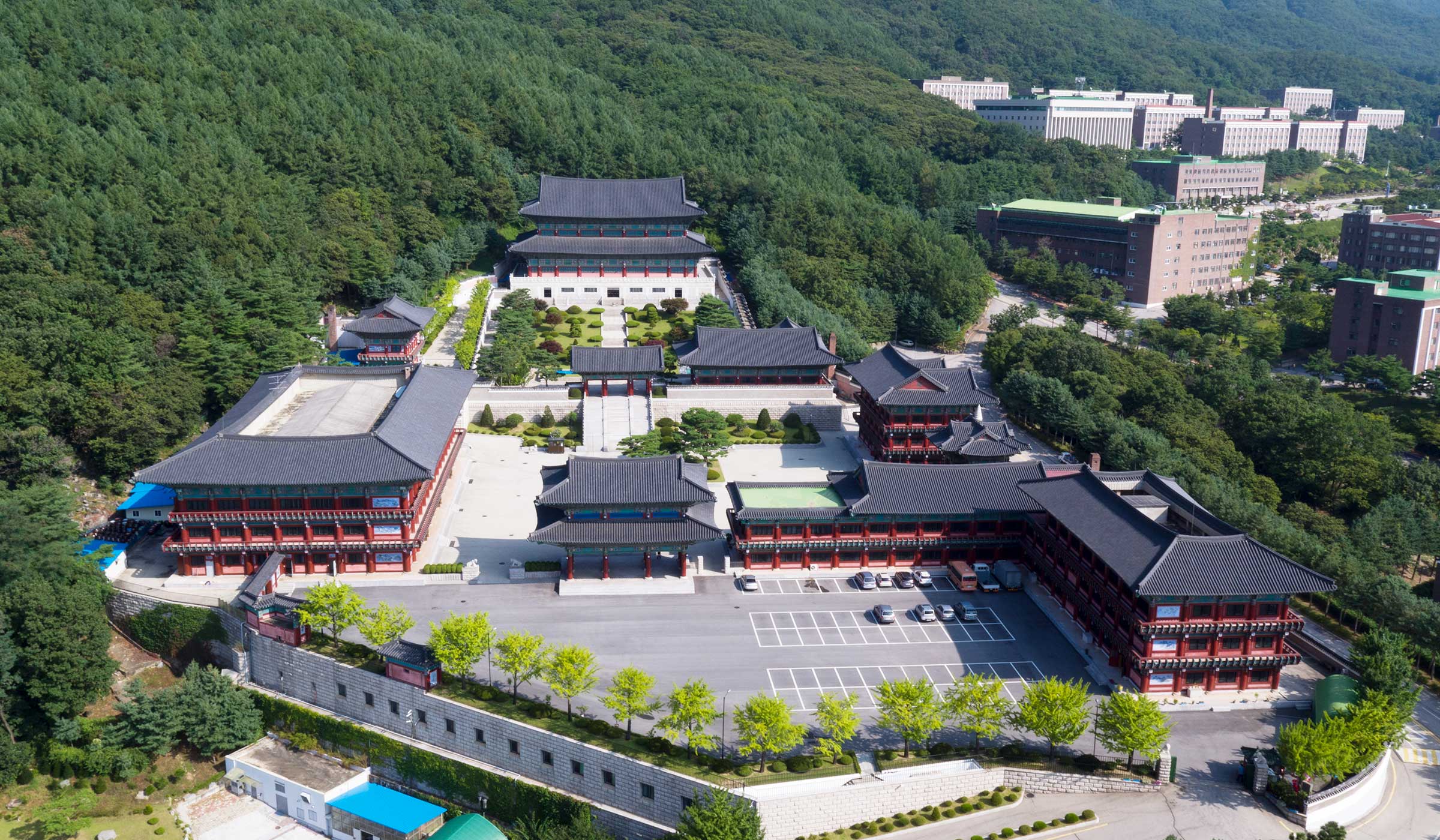
Pocheon Cultivation Temple Complex is located at the foot of Mount Wangbangsan in Seondan-dong, Pocheon-si. The name “Seondan” originates from a sacred altar on the mountainside of Mount Wangbangsan, long used for ceremonial offerings to a divine being.
Pocheon Cultivation Temple Complex was built in July 1992 and completed with five buildings on a site covering approximately 10,000 pyeong. Next to the temple is Daejin University.
The Holy Works of Specialized Training and Prayer were conducted at this temple. Since 1994, similar to the Yeoju Headquarters Temple Complex, lecture-style educational courses called Sugang have been regularly implemented. These courses are held over two nights and three days, with 72 participants per class, to enhance the faith and qualities of practitioners.
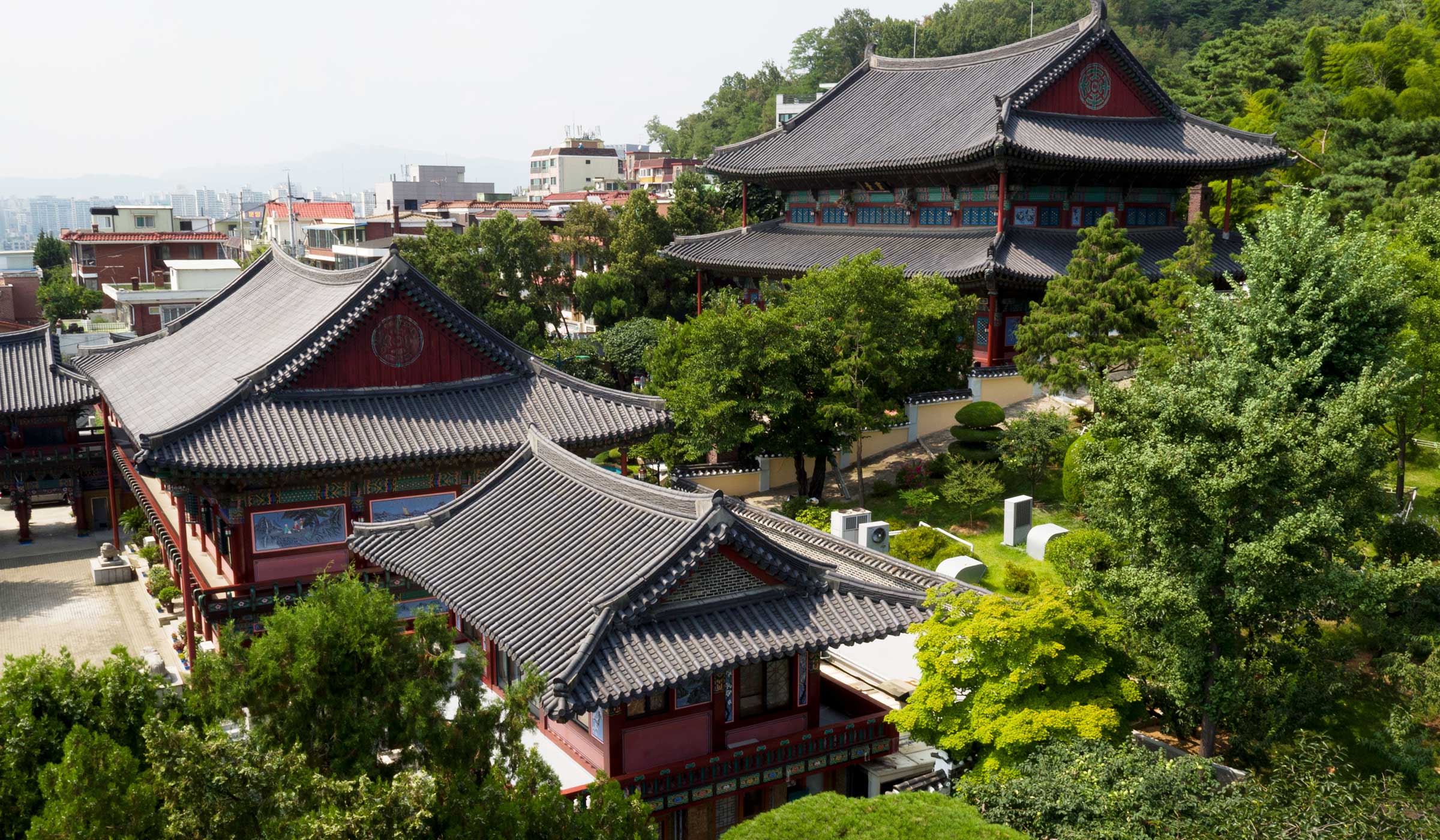
Junggok Temple Complex is located in the mountain range stretching from Bukhansan, Suraksan, and Yongmasan, with the Hangang River in view to the front. This temple complex, the founding site of Daesoon Jinrihoe, was established in May 1971. At this site, the foundational framework of the religious order, including its organizational system, was established, and the Three Major Works of the order—Charity Aid, Social Welfare, and Education—were publicly declared and implemented according to annual plans. Dojeon implemented Sugang (lecture-style educational courses, 1980) at this temple to enhance the spiritual capacity of Dao cultivators. Additionally, he introduced Gido-gongbu (the Holy Works of Prayer, 1974) and Suryeon (recitation training, 1978) at the temple complex.
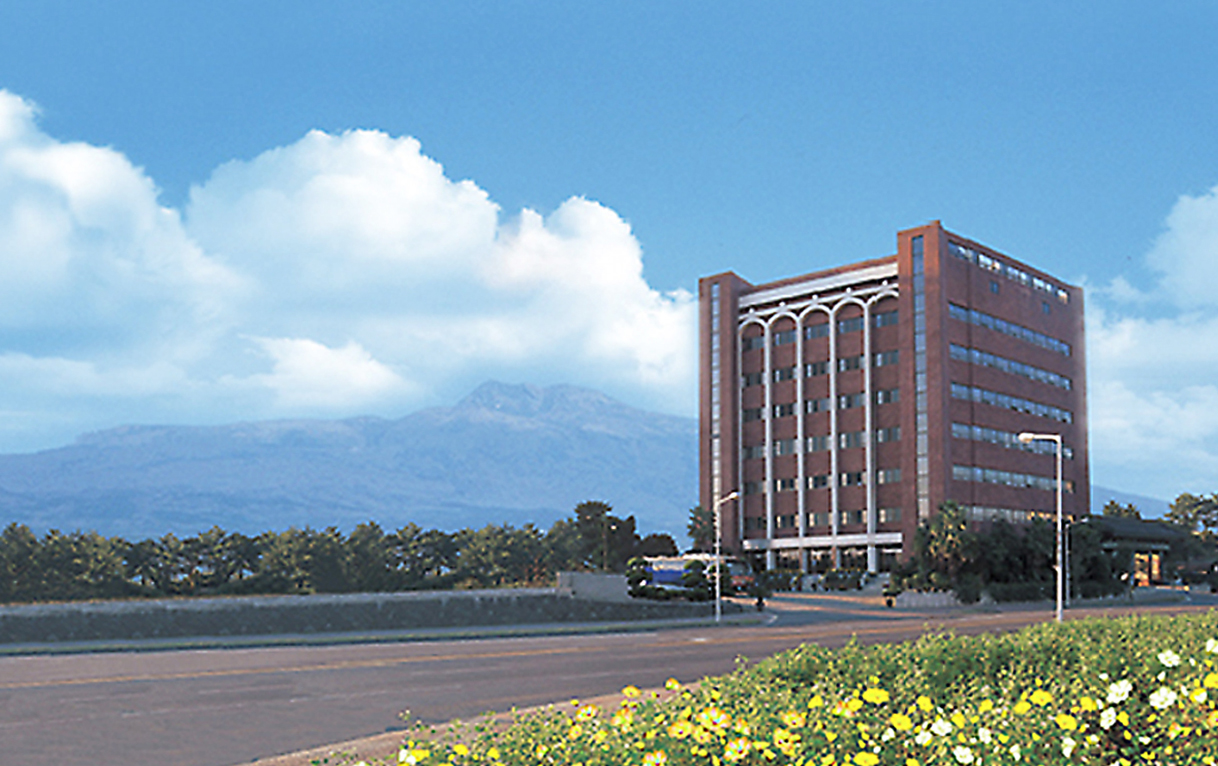
Jeju Training Temple is situated in Nohyeong-dong, Jeju-si, a place known for an ancient legend where immortals weigh good and evil on a scale. Construction of the temple began in March 1989 and was completed with an opening ceremony in July 1989.
The temple complex is a modern building consisting of 7 stories above ground and one story below ground. On the 7th floor, you can find Yeongdae Shrine (the Shrine of the Gods) and Daesoon-seongjeon (the Hall of Sacred Paintings).
To help Dao cultivators realize Daesoon Truth more deeply, Dojeon assigned them to conduct Yeonsu (educational courses with field trips) in natural settings. Starting in October 1989, Jeju Training Temple commenced weekly Yeonsu courses, hosting classes of up to 120 students for six days and five nights.





